Joel Belz wrote this compelling piece in WORLD Magazine that urges evangelicals to continue to focus on the sanctity of human life and marriage as core issues- worthy of being lifted above other important issues.
Stop Apologizing
It's not always wrong to be a "single-issue" advocate
WORLD Magazine
July 12, 2008
It's become an increasingly frequent reminder to us evangelical Christians not to let our cultural identity be framed by "single issues."
It was a reminder implicitly included in the "Evangelical Manifesto," a document whose basic content we at WORLD have applauded but whose political direction I questioned in our last issue. Why are the Manifesto's backers so ready to join the cultural left in suggesting a guilt trip for those evangelicals who have been preoccupied with the evils of abortion and same-sex marriage?
And if some argue that the rising generation of younger evangelicals is a bit embarrassed by what they think is an out-of-balance focus by their elders, and thinks it's time to get equally exercised over issues like racism, economic justice, and the environment—well, if that's the case with our twentysomethings and our teenagers, then maybe we need to go to work and do a better job of explaining to them why we've put the emphasis where we have for the last generation and why we believe that it's time not to lower our voices.
Evangelicals shouldn't be embarrassed to say boldly and clearly: Abortion and same-sex marriage are uniquely heinous sins. They rattle the foundations of a civilized society. They take a culture in a dreadful direction. We haven't been wrong to say so. We aren't fanatics.
And I'm not referring here so much to the young women caught in the anguish of an unexpected pregnancy or folks bewildered by their sexual identity. I'm talking mostly about a society that goes all out to tell such people that what they're doing is just fine. There's forgiveness for individual sinners. There's judgment for societies that lead them astray.
It's true that we evangelicals sometimes haven't been as zealous as we ought in fighting racism, abuse of the environment, and poverty. But on all those fronts and more, we're at least facing the right direction. We're sometimes slow.
But here's the difference: What evangelical do you know who says insensitivity to the poor should be promoted? What evangelical leader is calling for more racism? Who advocates the uncontrolled plundering of the environment?
That is exactly the kind of cheerleading that is going on for abortion and same-sex marriage. Whole movements and organizations devote themselves to telling us how good abortion and same-sex marriage are for society. It now is expected that Barack Obama feature on his speaking schedule, as he did on June 26, a New York fundraising dinner for the Democratic Gay and Lesbian Leadership Council—where the news account reports casually that Obama helped the homosexual lobby raise $1 million in just one evening.
But here's the core of the matter. To be robustly and consistently anti-abortion is at the very same time to cast your vote for environmental sensitivity, against racism, and for economic justice. These are not independent, isolated packages.
It's hard to see how anyone can claim to be a protector of the environment and not put a high priority on the preservation of human babies. To defend a focus on the future of polar bears and whales, while asking evangelicals to get less noisy about infant humans, is an embarrassing
contradiction.
Similarly, keep in mind that abortion is one of the most racist of all social causes in history. Minorities don't just happen incidentally to be targeted by the practice of abortion. The history of Planned Parenthood and similar organizations is racist to the core—as is their current practice.
And no economist can look at the loss of 50 million American babies over the last 45 years and not wince at the impact of such a drain on the economic vitality of our society. Today's poor Americans are poorer than they would have been if we'd taken care to preserve enough consumers—and workers—to fill a state one-and-a-half times as big as California. Tomorrow's elderly will worry about Social Security more than they would have with 50 million more contributors to the system.
So stop apologizing for having focused on a single issue. Don't let the "Evangelical Manifesto" or anyone else shame you into an overly narrow self-image. It's the folks promoting causes like abortion and same-sex marriage who are the real "single issue" fanatics, falsely teaching that you can mess with just one or two aspects of life without upsetting the balance God so wondrously installed in His creation order. We need to expose that lie for the tragic falsehood that it is—and to teach the next generation what a very bad bargain they have been asked to accept.

Wednesday, July 16, 2008

Thursday, January 10, 2008
Anti-slots campaign targets Jan. 29 vote
From the Miami Herald:
A new anti-casinos group that includes greyhound advocates, mothers against gambling and conservative Christian organizations declared Wednesday that ''Miami is not for sale'' as it announced plans to fight the Jan. 29 slot machine referendum.
Miami-Dade County voters will decide at the end of the month whether to allow the county's horse track, dog track and jai-alai fronton to install Class III, Las Vegas-style slot machines like those already operating at parimutuel facilities in Broward County.
The new group, which calls itself No Casinos Miami, includes a broad array of social and religious causes. In a news release, it defines itself as a ``left-right bipartisan group.''
With only 20 days left before the election, organizers acknowledged at a news conference that they come in at a disadvantage. A pro-slots group organized months ago.
''It's our people against their money and muscle,'' said Tom Grey, field director of the National Coalition Against Gambling Expansion.
Proponents of the referendum insisted Wednesday that slot machines will bring economic stimulus for local residents and pump millions into the local and state coffers through taxes.
''This referendum is bringing new opportunities through job creation, millions of dollars to local governments and over $200 million to the state education fund,'' said Christian Ulvert, press secretary for the pro-slots political committee, Yes for a Greater Miami-Dade.
The new anti-casinos group includes representatives of the Florida Family Policy Council, the Christian Coalition of South Florida, Grey2K USA, Focus on the Family and the Animal Rights Foundation of Florida. Others attending included a University of Miami student, Chris Hill, and a Miami mother of five. Both said they are planning to organize groups to oppose the referendum.
No Casinos Miami is not the same as a previous political committee, called No Casinos, that was created to fight earlier casino efforts, including a 2005 referendum when Broward County approved slot machines at parimutuels but Miami-Dade narrowly rejected the idea with 52 percent of the vote.
If the referendum passes this time, it will allow slot machines at Calder Race Course, Flagler Dog Track and Sports Entertainment Center and Miami Jai-Alai. Slot machines already spin at three Broward ''racinos'' and a fourth casino has yet to be built.
Adding heat to the debate: the announcement this week that the Seminole Tribe's gambling agreement with Gov. Charlie Crist has received federal approval, allowing the tribe to install Las Vegas-style slots and card games such as blackjack at its seven Florida casinos. The agreement is still being disputed in the Florida Supreme Court.
Another group, United for Family Values, has previously announced its opposition to the referendum, and House Speaker Marco Rubio has promised to campaign against it as well.
Chad Hills, a spokesman for Focus on the Family, said the new group opposes gambling because it adversely affects families.
''Addiction, bankruptcy and crime -- we call it the A-B-Cs of gambling,'' he said. ``You're either pro-family or you're pro-gambling. You're not both.''
No Casinos Miami will hold an organizational meeting at 7:30 p.m. Thursday at the Residence Inn, 1212 NW 82nd Ave.
A new anti-casinos group that includes greyhound advocates, mothers against gambling and conservative Christian organizations declared Wednesday that ''Miami is not for sale'' as it announced plans to fight the Jan. 29 slot machine referendum.
Miami-Dade County voters will decide at the end of the month whether to allow the county's horse track, dog track and jai-alai fronton to install Class III, Las Vegas-style slot machines like those already operating at parimutuel facilities in Broward County.
The new group, which calls itself No Casinos Miami, includes a broad array of social and religious causes. In a news release, it defines itself as a ``left-right bipartisan group.''
With only 20 days left before the election, organizers acknowledged at a news conference that they come in at a disadvantage. A pro-slots group organized months ago.
''It's our people against their money and muscle,'' said Tom Grey, field director of the National Coalition Against Gambling Expansion.
Proponents of the referendum insisted Wednesday that slot machines will bring economic stimulus for local residents and pump millions into the local and state coffers through taxes.
''This referendum is bringing new opportunities through job creation, millions of dollars to local governments and over $200 million to the state education fund,'' said Christian Ulvert, press secretary for the pro-slots political committee, Yes for a Greater Miami-Dade.
The new anti-casinos group includes representatives of the Florida Family Policy Council, the Christian Coalition of South Florida, Grey2K USA, Focus on the Family and the Animal Rights Foundation of Florida. Others attending included a University of Miami student, Chris Hill, and a Miami mother of five. Both said they are planning to organize groups to oppose the referendum.
No Casinos Miami is not the same as a previous political committee, called No Casinos, that was created to fight earlier casino efforts, including a 2005 referendum when Broward County approved slot machines at parimutuels but Miami-Dade narrowly rejected the idea with 52 percent of the vote.
If the referendum passes this time, it will allow slot machines at Calder Race Course, Flagler Dog Track and Sports Entertainment Center and Miami Jai-Alai. Slot machines already spin at three Broward ''racinos'' and a fourth casino has yet to be built.
Adding heat to the debate: the announcement this week that the Seminole Tribe's gambling agreement with Gov. Charlie Crist has received federal approval, allowing the tribe to install Las Vegas-style slots and card games such as blackjack at its seven Florida casinos. The agreement is still being disputed in the Florida Supreme Court.
Another group, United for Family Values, has previously announced its opposition to the referendum, and House Speaker Marco Rubio has promised to campaign against it as well.
Chad Hills, a spokesman for Focus on the Family, said the new group opposes gambling because it adversely affects families.
''Addiction, bankruptcy and crime -- we call it the A-B-Cs of gambling,'' he said. ``You're either pro-family or you're pro-gambling. You're not both.''
No Casinos Miami will hold an organizational meeting at 7:30 p.m. Thursday at the Residence Inn, 1212 NW 82nd Ave.
Thursday, January 03, 2008
Accomplishments in 2007
The Florida Family Policy Council is grateful for the support we receive from people all over the state. We wanted to share a brief summary of what you have helped us to accomplish during 2007.
CLICK HERE to read about our work in the Florida legislature, news coverage we have received in the media and other accomplishments across the state.
CLICK HERE to read about our work in the Florida legislature, news coverage we have received in the media and other accomplishments across the state.
Monday, July 02, 2007
Support for Gay Marriage Decreases
A new study out by the respected Pew Research Center indicates more American's are frowning upon the idea of allowing homosexuals to marry. The report states: "Currently, a clear majority (57%) of the public opposes allowing gays and lesbians to marry, up from 51% in March of 2006..."
Florida Family Policy Council President John Stemberger:
This is good news for Florida4Marriage.org’s Florida's Marriage Protection Amendment. The amendment will be on the general election ballot in November of 2008 after the collection of just 18,000 more signatures. In every state that has passed a marriage amendment, the final vote has been 6-8% greater than the polls. The new law now requires a 60% popular vote to pass any new amendments. No other state in the nation has a hurdle this high. While this is not a Florida specific poll, it, along with the polling variance history from other states, demonstrates that the Florida Marriage Amendment is viable and well within the reach of Florida’s citizens.
While the poll is an encouraging development for supporters of natural marriage, it is no basis for its supporters to rest easy by any means. This effort will require mounting the biggest, most well funded and robust effort ever undertaken in any state’s marriage amendment history. The opponents of the amendment think Florida is low hanging fruit for a same-sex marriage victory. They will surely bring every homosexual activist group in the country to Florida. The only question is, are the supporters of natural marriage up for the fight? You tell us ladies and gentlemen. Game On? Click on “Comments” below and share your thoughts.
To read the full report, CLICK HERE.
To read a story about the findings in The Christian Post, CLICK HERE.
Florida Family Policy Council President John Stemberger:
This is good news for Florida4Marriage.org’s Florida's Marriage Protection Amendment. The amendment will be on the general election ballot in November of 2008 after the collection of just 18,000 more signatures. In every state that has passed a marriage amendment, the final vote has been 6-8% greater than the polls. The new law now requires a 60% popular vote to pass any new amendments. No other state in the nation has a hurdle this high. While this is not a Florida specific poll, it, along with the polling variance history from other states, demonstrates that the Florida Marriage Amendment is viable and well within the reach of Florida’s citizens.
While the poll is an encouraging development for supporters of natural marriage, it is no basis for its supporters to rest easy by any means. This effort will require mounting the biggest, most well funded and robust effort ever undertaken in any state’s marriage amendment history. The opponents of the amendment think Florida is low hanging fruit for a same-sex marriage victory. They will surely bring every homosexual activist group in the country to Florida. The only question is, are the supporters of natural marriage up for the fight? You tell us ladies and gentlemen. Game On? Click on “Comments” below and share your thoughts.
To read the full report, CLICK HERE.
To read a story about the findings in The Christian Post, CLICK HERE.
Thursday, June 07, 2007
Dispute Over Value of Partial Birth Abortion Ban
After the partial birth abortion decision by the US Supreme Court, we are witnessing the most visible and unpleasant dispute in the pro life movement I have seen in my lifetime. Much of the heat is coming from our brothers and sisters on the front line of the pro life movement.
Those who are called by God to be pro-life side walk counselors and rescuers are a lot like Emergency Room doctors. Absolutely essential.
But all ER docs see, all day long is the direct and ugly bloodiness of catastrophic injury and death.
The number of patients may be dropping, the need for the ER services may be lessened, the public may be in large numbers getting wiser and making safer choices, other doctors maybe working effectively to prevent the need for ER visits, the seat belt and helmet laws may be reducing the need for ER visits, the lines waiting for ER services might become less than they were in previous years, people’s attitudes could be changing about public safety, laws could be making products safer----all of which may be evidence that we are gradually make steps toward winning the fight against catastrophic injury and making our world safer.
But--- The ER doctors only continue to see catastrophic injury and bloodshed all day, every day. And so as a result ER doctors can become myopic, subjective and unwilling to be convinced that any progress is being made in the wider area of public safety. ER doctors can also become unknowingly arrogant and self righteous thinking that their work is THE most important work of all in the whole medical community. There is a lot we can learn from ER doctors because they are on the front line of emergency medicine, one of the most vital links in modern medicine. But ER doctors also can become so close to the problem that they become emotional crusaders who are unable to accurately evaluate the wider picture of health and the overall public opinion on safety or percentage of catastrophic injuries in the community.
Let’s pray for our ER doctors. And let’s also pray for our sidewalk counselors and pro life rescuers to have the humility and wisdom to be more effective and discerning in valuing and embracing of all parts of the Body of Christ in the pro-life movement that God has raised up to protect the unborn.
Those who are called by God to be pro-life side walk counselors and rescuers are a lot like Emergency Room doctors. Absolutely essential.
But all ER docs see, all day long is the direct and ugly bloodiness of catastrophic injury and death.
The number of patients may be dropping, the need for the ER services may be lessened, the public may be in large numbers getting wiser and making safer choices, other doctors maybe working effectively to prevent the need for ER visits, the seat belt and helmet laws may be reducing the need for ER visits, the lines waiting for ER services might become less than they were in previous years, people’s attitudes could be changing about public safety, laws could be making products safer----all of which may be evidence that we are gradually make steps toward winning the fight against catastrophic injury and making our world safer.
But--- The ER doctors only continue to see catastrophic injury and bloodshed all day, every day. And so as a result ER doctors can become myopic, subjective and unwilling to be convinced that any progress is being made in the wider area of public safety. ER doctors can also become unknowingly arrogant and self righteous thinking that their work is THE most important work of all in the whole medical community. There is a lot we can learn from ER doctors because they are on the front line of emergency medicine, one of the most vital links in modern medicine. But ER doctors also can become so close to the problem that they become emotional crusaders who are unable to accurately evaluate the wider picture of health and the overall public opinion on safety or percentage of catastrophic injuries in the community.
Let’s pray for our ER doctors. And let’s also pray for our sidewalk counselors and pro life rescuers to have the humility and wisdom to be more effective and discerning in valuing and embracing of all parts of the Body of Christ in the pro-life movement that God has raised up to protect the unborn.
Wednesday, May 30, 2007
David Brooks: Conservative Success Depends on Adopting Liberal Policies?
An editorial that ran in the April 29th New York Times and many other papers makes the claim that conservatives have not had political success in recent elections because they did not adopt liberal policies.
Gary Schneeberger, senior media director of government and public policy for Focus on the Family Action, has written the following response that was sent to all the papers that carried by David Brooks editorial.
To the editor,
David Brooks says all the GOP needs to cure what ails it is something or someone “unorthodox” enough to ignite the public’s interest, in an April 29 editorial in The New York Times. He then claims my boss, Focus on the Family Action’s Dr. James Dobson, limits the free exercise of unorthodoxy in social policy by “whacking” anyone who proposes it.
Balderdash. What cost Republicans the last election was running away from issues their base cares about. Brooks may consider it stiflingly "orthodox" to protect the preborn, preserve traditional marriage and rein in out-of-control courts, but those “Values Voters” everyone was talking about four years ago certainly don’t. They’re still out there, looking for someone "orthodox" enough (from either party) to advance the issues that matter to them – and if they don’t find him, they may stay home in ’08 like many did in ’06.
As for this "whacking" business: If that’s how Brooks wants to define the way Dr. Dobson alerts families to policy matters that affect them, using a platform he’s earned from 30 years of helping Americans raise their kids and keep their marriages together, I suppose it’s his right. It just seems an awfully unorthodox interpretation – and not in a good way.
Gary Schneeberger
Senior Media Director
Focus on the Family Action
Source: http://www.citizenlink.org/content/A000004526.cfm
Gary Schneeberger, senior media director of government and public policy for Focus on the Family Action, has written the following response that was sent to all the papers that carried by David Brooks editorial.
To the editor,
David Brooks says all the GOP needs to cure what ails it is something or someone “unorthodox” enough to ignite the public’s interest, in an April 29 editorial in The New York Times. He then claims my boss, Focus on the Family Action’s Dr. James Dobson, limits the free exercise of unorthodoxy in social policy by “whacking” anyone who proposes it.
Balderdash. What cost Republicans the last election was running away from issues their base cares about. Brooks may consider it stiflingly "orthodox" to protect the preborn, preserve traditional marriage and rein in out-of-control courts, but those “Values Voters” everyone was talking about four years ago certainly don’t. They’re still out there, looking for someone "orthodox" enough (from either party) to advance the issues that matter to them – and if they don’t find him, they may stay home in ’08 like many did in ’06.
As for this "whacking" business: If that’s how Brooks wants to define the way Dr. Dobson alerts families to policy matters that affect them, using a platform he’s earned from 30 years of helping Americans raise their kids and keep their marriages together, I suppose it’s his right. It just seems an awfully unorthodox interpretation – and not in a good way.
Gary Schneeberger
Senior Media Director
Focus on the Family Action
Source: http://www.citizenlink.org/content/A000004526.cfm
Wednesday, March 14, 2007
IN DEFENSE OF SOCIAL CONSERVATIVISM
The Case for Continuing our Focus on the Family in Matters of Public Policy
By John Stemberger
Today's evangelicals are at a crossroads. There is a movement afoot among more moderate evangelicals advocating that conservative Christians adjust our policy focus away from traditional pro-family issues including abortion and same sex marriage to "compassion issues" such as global warming, poverty and AIDS. On the other side of the ideological spectrum, the "leave me alone" coalition of libertarian and fiscal conservatives assert that the new core issues on our agenda should include immigration, taxes and tort reform. Both of these two movements are calling for change in the scope and substance of our agenda after three decades of Christian activism. What, then, should be our response? The answer is found in returning to the first principles of why we are social conservatives, and to again affirm the primacy of family in matters of public policy.
What is a Social Conservative?
The hallmark of a social conservative in the American political context is a primary commitment to protecting traditional marriage, family and moral structures in culture and public policy. Social conservatives are willing to draw a line in the political "sand" over certain core issues - those that so fundamental to a civilized society that we disqualify public officials if they do not support these basic human values. It is clear that life and marriage have been two such disqualification issues. But are there other fundamental issues our agenda should include?
God Plan for Social Order
As Christians, we should be about comprehensively discerning God's social order for all areas of life. In many matters of ethics and policy the scripture speaks with clarity. Yet other issues leave us debating incremental judgments about issues of prudence; stewardship; necessary boundaries in granting rights; regulating behavior; punishing crime; paying restitution; public funding; legal protection; or due process. While all issues are moral issues, we can not speak with the same moral strength on abortion and marriage as we do on how to fund hurricane relief or immigration policy.
Why Focus on the Family?
As with any movement, effectiveness requires sustained focus. If we attempt to be experts on every issue and fight every battle, we will loose the cohesiveness of our constituency and weaken our prophetic voice. We will also be less effective in the final result. Effective strategy requires well protected priorities. The issues surrounding marriage, family and life itself must remain the primary focus of our movement as social conservatives. But why continue to limit the focus primarily to family issues? There are at least five good reasons.
1. Families are the First and Most Basic Form of Government
Theologian Abraham Kyper was the first to communicate the Biblical concept of "Sphere Sovereignty." Within society there are various institutions, all of which have their own authority, limitations and purpose. The three primary spheres are family, church and civil government. Of the three, family is clearly the most important sphere. Families were established in creation as the foundational institution for ordering human behavior and were the first and most basic form of government given by God. Families shape and develop character, values and traditions - and they socialize the little human beings we call children. Most importantly, family is the primary sphere in which personal responsibility or "self-government" is learned.
2. Our Opposition Seeks to Redefine the Human Experience Itself
Our opposition does not have mere marginal disagreement with us on certain domestic policies. Many are seeking to redefine the human experience itself. What was morally unthinkable just a generation ago is now not only socially acceptable but is, in many cases, also protected by the full force of law and newly discovered rights created by judicial fiat. Their worldview is deeply rooted in personal autonomy, moral relativism, Social Darwinism, homosexualizing culture, secularizing the public square and escaping from all social norms. This unbiblical thinking barely resembles any vision of human civilization we have historically known and the implications to the family are far reaching and devastating.
3. Family Breakdown Contributes to Every Other Domestic Policy Problem
It is hard to imagine a domestic policy issue which is not directly affected by problems associated with the breakdown of families. Poverty, crime, welfare, abortion, education, health care, social security, STDs and elder affairs are all drastically effected by the strength or weakness of our families. Consider the consequences of divorce, absentee moms and dads, moral relativism, a void of character training, lacking male role models, gambling and a host of other maladies on our society. When we work toward keeping families first in our public policy focus, we are simultaneously getting to the root of numerous other social ills which plague our society.
4. The Direct Relationship Between Family Breakdown and Government Growth
It appears we have lost Reagan's battle against big government. One of the primary reasons for the massive growth of government in the past 50 years has been the failure of the family to function in its proper role. It is easy to demonstrate the direct and corresponding relationship between the brokenness of families and the growth of taxation and government regulation. The family is God's original department of health and human services. When families fail, the government steps in to save what's decaying. This "state sponsored salvation" requires greater taxation and a growing bureaucracy to sustain this massive social safety net. We must work for cultural, policy and legal structures that create incentives for families -- and, by extension, churches and communities -- to embrace their rightful place as the decentralized and personal caretakers for those in need.
5. Who We Are is More Important than How Much We Get
Economics, welfare, taxes, disaster relief and insurance are all important issues that must be vigorously debated. But these issues will always be with us. Public policy must be about more than "who" gets "what." Social conservatives understand that moral, social and cultural issues transcend economics. Social and moral issues define us a people. Nothing is more important to the destiny of a people than its cultural heritage. The very social fabric of our culture is preserved by focusing on the family in matters of policy. One of the chief objections William Wilberforce faced in parliament to ending the slave trade was that "ending the trade would damage the economy." Doing the right things in life is always more important than getting the right things in life.
National Security: The New Pro-Family Issue
Leading conservative evangelicals are now arguing that national security should become a new core issue for pro-family social conservatives. Simply put, if an Al-Qaeda dirty bomb takes out an entire major American city, what good is advocacy for the unborn in view of such an attack? The fact of the matter is this: we must recognize that we now have enemies, both foreign and domestic, who must be taken seriously. If we limit ourselves to consensus issues like radical Islam and the war on terror, I fully agree. National security must become a new core issue for social conservatives in light of this now clear and present danger.
Finally, What if We Succeed?
After a lecture, I was talking with a noted theologian recently who posed this question: "If we ended abortion in this country and protected marriage in all 50 states, would God then be concerned about other issues like the poor, the economy, the environment and other justice issues?" It was an interesting question. But there is an assumption in his question that cannot be overlooked. Are we even close to ending the ongoing battle against abortion? Are marriage and family structures adequately protected from radical redefinition? Has the onslaught of obscenity and secularism in our culture subsided? Until we can answer yes, we should stay the course and continue to focus on the family in matters of public policy.
John Stemberger is a lawyer in Orlando, Florida who serves as the President and General Counsel of the Florida Family Policy Council. The mission of the FFPC is to strengthen Florida's families through public policy research, issues research, and grassroots advocacy. The FFPC is associated with Dr. James Dobson and Focus on the Family.
By John Stemberger
Today's evangelicals are at a crossroads. There is a movement afoot among more moderate evangelicals advocating that conservative Christians adjust our policy focus away from traditional pro-family issues including abortion and same sex marriage to "compassion issues" such as global warming, poverty and AIDS. On the other side of the ideological spectrum, the "leave me alone" coalition of libertarian and fiscal conservatives assert that the new core issues on our agenda should include immigration, taxes and tort reform. Both of these two movements are calling for change in the scope and substance of our agenda after three decades of Christian activism. What, then, should be our response? The answer is found in returning to the first principles of why we are social conservatives, and to again affirm the primacy of family in matters of public policy.
What is a Social Conservative?
The hallmark of a social conservative in the American political context is a primary commitment to protecting traditional marriage, family and moral structures in culture and public policy. Social conservatives are willing to draw a line in the political "sand" over certain core issues - those that so fundamental to a civilized society that we disqualify public officials if they do not support these basic human values. It is clear that life and marriage have been two such disqualification issues. But are there other fundamental issues our agenda should include?
God Plan for Social Order
As Christians, we should be about comprehensively discerning God's social order for all areas of life. In many matters of ethics and policy the scripture speaks with clarity. Yet other issues leave us debating incremental judgments about issues of prudence; stewardship; necessary boundaries in granting rights; regulating behavior; punishing crime; paying restitution; public funding; legal protection; or due process. While all issues are moral issues, we can not speak with the same moral strength on abortion and marriage as we do on how to fund hurricane relief or immigration policy.
Why Focus on the Family?
As with any movement, effectiveness requires sustained focus. If we attempt to be experts on every issue and fight every battle, we will loose the cohesiveness of our constituency and weaken our prophetic voice. We will also be less effective in the final result. Effective strategy requires well protected priorities. The issues surrounding marriage, family and life itself must remain the primary focus of our movement as social conservatives. But why continue to limit the focus primarily to family issues? There are at least five good reasons.
1. Families are the First and Most Basic Form of Government
Theologian Abraham Kyper was the first to communicate the Biblical concept of "Sphere Sovereignty." Within society there are various institutions, all of which have their own authority, limitations and purpose. The three primary spheres are family, church and civil government. Of the three, family is clearly the most important sphere. Families were established in creation as the foundational institution for ordering human behavior and were the first and most basic form of government given by God. Families shape and develop character, values and traditions - and they socialize the little human beings we call children. Most importantly, family is the primary sphere in which personal responsibility or "self-government" is learned.
2. Our Opposition Seeks to Redefine the Human Experience Itself
Our opposition does not have mere marginal disagreement with us on certain domestic policies. Many are seeking to redefine the human experience itself. What was morally unthinkable just a generation ago is now not only socially acceptable but is, in many cases, also protected by the full force of law and newly discovered rights created by judicial fiat. Their worldview is deeply rooted in personal autonomy, moral relativism, Social Darwinism, homosexualizing culture, secularizing the public square and escaping from all social norms. This unbiblical thinking barely resembles any vision of human civilization we have historically known and the implications to the family are far reaching and devastating.
3. Family Breakdown Contributes to Every Other Domestic Policy Problem
It is hard to imagine a domestic policy issue which is not directly affected by problems associated with the breakdown of families. Poverty, crime, welfare, abortion, education, health care, social security, STDs and elder affairs are all drastically effected by the strength or weakness of our families. Consider the consequences of divorce, absentee moms and dads, moral relativism, a void of character training, lacking male role models, gambling and a host of other maladies on our society. When we work toward keeping families first in our public policy focus, we are simultaneously getting to the root of numerous other social ills which plague our society.
4. The Direct Relationship Between Family Breakdown and Government Growth
It appears we have lost Reagan's battle against big government. One of the primary reasons for the massive growth of government in the past 50 years has been the failure of the family to function in its proper role. It is easy to demonstrate the direct and corresponding relationship between the brokenness of families and the growth of taxation and government regulation. The family is God's original department of health and human services. When families fail, the government steps in to save what's decaying. This "state sponsored salvation" requires greater taxation and a growing bureaucracy to sustain this massive social safety net. We must work for cultural, policy and legal structures that create incentives for families -- and, by extension, churches and communities -- to embrace their rightful place as the decentralized and personal caretakers for those in need.
5. Who We Are is More Important than How Much We Get
Economics, welfare, taxes, disaster relief and insurance are all important issues that must be vigorously debated. But these issues will always be with us. Public policy must be about more than "who" gets "what." Social conservatives understand that moral, social and cultural issues transcend economics. Social and moral issues define us a people. Nothing is more important to the destiny of a people than its cultural heritage. The very social fabric of our culture is preserved by focusing on the family in matters of policy. One of the chief objections William Wilberforce faced in parliament to ending the slave trade was that "ending the trade would damage the economy." Doing the right things in life is always more important than getting the right things in life.
National Security: The New Pro-Family Issue
Leading conservative evangelicals are now arguing that national security should become a new core issue for pro-family social conservatives. Simply put, if an Al-Qaeda dirty bomb takes out an entire major American city, what good is advocacy for the unborn in view of such an attack? The fact of the matter is this: we must recognize that we now have enemies, both foreign and domestic, who must be taken seriously. If we limit ourselves to consensus issues like radical Islam and the war on terror, I fully agree. National security must become a new core issue for social conservatives in light of this now clear and present danger.
Finally, What if We Succeed?
After a lecture, I was talking with a noted theologian recently who posed this question: "If we ended abortion in this country and protected marriage in all 50 states, would God then be concerned about other issues like the poor, the economy, the environment and other justice issues?" It was an interesting question. But there is an assumption in his question that cannot be overlooked. Are we even close to ending the ongoing battle against abortion? Are marriage and family structures adequately protected from radical redefinition? Has the onslaught of obscenity and secularism in our culture subsided? Until we can answer yes, we should stay the course and continue to focus on the family in matters of public policy.
John Stemberger is a lawyer in Orlando, Florida who serves as the President and General Counsel of the Florida Family Policy Council. The mission of the FFPC is to strengthen Florida's families through public policy research, issues research, and grassroots advocacy. The FFPC is associated with Dr. James Dobson and Focus on the Family.
Monday, January 15, 2007
The First Really Bad Idea of 2007
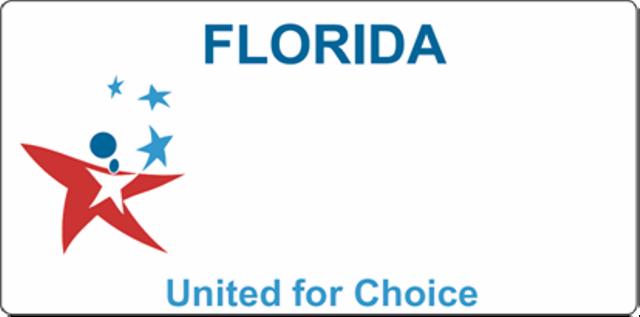
On their best day, the so called "pro-choice" advocates say they want to make abortions "safe, rare and legal". But the latest bad idea they have come up with is Exhibit "A" as to why they are not pro-choice at all, but pro-abortion. The "award winning" license plate design is a half way honest but creepy depiction of a blood-red mother star with her patriotic blue star baby apparently floating upward into the sky after being aborted-- all against a pure snow white background. I supposed you have to think long and hard about how to come up with a user friendly way to depict the grizzly surgical procedure of an abortion.
Read full article...
Monday, January 08, 2007
Amniotic Fluid offers new Stem Cell Hope
There is an ongoing national debate over the best way to approach scientific research using stem cells. The debate has centered around those who want to destroy human embryos for the purpose of obtaining stem cells for experiments verses those who want to pursue the more promising and ethical adult stem cell research.
Now, new research is revealing that there may be another option. A study just released finds that stem cells can be obtains from amniotic fluid.
The LA Times reported today:
Now, new research is revealing that there may be another option. A study just released finds that stem cells can be obtains from amniotic fluid.
The LA Times reported today:
Researchers have found that some stem cells in human amniotic fluid appear
to have many of the key therapeutic benefits of embryonic stem cells while
avoiding their knottiest ethical, medical and logistical drawbacks, according to
a study published Sunday.
The stem cells — easy to harvest from the fluid left over from amniocentesis tests given to many pregnant women — were used to create bone, heart muscle, blood vessels, fat, and nerve and liver tissues, the study said.
"So far, we've been successful with every cell type we've attempted to produce from these stem cells," said study senior author Anthony Atala, director of the Institute for Regenerative Medicine at Wake Forest University School of Medicine in Winston-Salem, N.C. The report was published online by the journal Nature Biotechnology.
CLICK HERE to read the full article
CLICK HERE to view a TV News report on this new discovery
Wednesday, August 30, 2006
Governed not by polls, politics nor profits..."
A Principle Based Manifesto on Voting for Social Conservatives
Since I cast my first rather misguided vote in 1980, I have given much thought and consideration toward developing a principle based grid for political decision making. What are the moral "first principles" to consider when deciding who to vote for and why? These points below represent an attempt to develop a principled approach for social conservatives exercising active citizenship as we choose and support candidates.
1) The pro-life issue is not merely a single issue-it is a disqualification issue.
As a movement, social conservatives have and will continue to have influence only if we are willing to draw an "ethical line in the sand" over certain core moral principles. The single most important such principle is the protection of human life from conception to natural death. From the destruction of human embryos, to killing people because they are old or disabled, pro-life issues represent the most fundamental of all human rights issues. Many have accused pro-lifers of being "single issue" voters. However, the pro-life issue is not merely a single issue, it is a disqualification issue-and one which goes to the core of human dignity and respect. So-called "pro-choice" candidates in essence argue that unborn children and other unwanted human beings should be denied full legal protection as persons under our constitution. This disqualifies them from holding public office. Whether rich or poor, young or old, handicapped or whole, born and unborn, all human life is made in the image and likeness of God and is therefore worthy of legal protection. If we are ever going to roll back the tide of these human atrocities, then we must be firm in our resolve to reject candidates who refuse to support this timeless and controlling principle. This is a hill we must be willing to die upon.
2) We should not vote for candidates based upon where they stand in the polls.
Everyone wants to support a winner and no one wants to be with a loser. This may represent worldly wisdom but certainly not eternal truth. We are governed not by polls, politics nor profits-but by principle. Poll based voting is probably the single most insidious deception we can fall into as a movement. It is unprincipled to the core and a misguided way to engage in political decision making. The insatiable desire to be popular, to be an insider, and to be a winner for the sake of personal or political gain must be resisted with all our might if we are going to be people of integrity who have a sustained and lasting impact upon the process. On the other hand, throwing your vote away for totally long shot candidates can keep good viable candidates from getting elected, so we need to be both wise and strategic. While I do believe that electability and political viability can be legitimate factors to consider, these are not the type of first principles which should guide our initial or final political choices.
3) Character matters-a lot!
Modern American political history screams the truth that "character matters"-a lot! Even candidates that seem to be very committed to social conservative issues can still be very bad choices if they lack basic character. Temper tantrums, arrogance, dishonesty, poor judgment, ethical compromise, disloyalty, undisciplined lifestyles, financial mismanagement, rampant immorality and broken promises are all red flags that should be considered in deciding upon a candidate. And unless you know a candidate personally or know someone who knows the candidates you may never know the truth about a person's character and lifestyle. Having good character is critical and without it, an elected official can easily turn into an embarrassing disaster in no time.
4) We are not electing pastors or priests; we are choosing civil government officials.
While character matters quite a bit, we must also remember that we are not electing pastors or priests-we are choosing civil government leaders. Personal immorality in the lives of our political leaders is an unfortunate but common reality. Affairs, divorce, alcohol and drug abuse, gambling and other manner of vice all present a question about how we should evaluate such behavior. While we must stand for righteousness, we must also guard against our own self-righteousness in evaluating others. Truth be told, there was only one perfect man and we crucified Him over 2000 years ago. While it would be preferable to have men and woman in public office whose personal lives are required to be "above reproach," like pastors, this is often not an option in our fallen world. A working principle to consider is that we should be more willing to forgive personal indiscretions and immorality that occurred in the long ago past than those transgressions that occurred recently. Time and retrospection offer the greatest opportunity for real contrition and conversion. Was this matter a mistake? An isolated moral failure? Or was it a pattern of long-standing bad behavior?
5) Realize that elections present both clear choices and mixed choices.
In some election years candidates stand in stark and clear contrast on the issues and the choice is easy. However, it becomes more difficult when there is a mixture of good and bad factors to weigh. We live in an imperfect and fallen world and so we are often presented with a sort of choice-of-evils problem. This can be frustrating because many of us understand and want to clearly see right from wrong in the world. Yet, competing strengths and weaknesses can be difficult to weigh when there is no clear moral answer to the question, "who is the best"? Political candidates can hide, lie, misrepresent, and manipulate their past record or present views. However, usually with enough good information, it is possible to determine which of the candidates presents the "lesser of the evils." Staying home and shirking your most important civic duty should never be an option. Do the best you can and engage in the process as an active citizen.
6) "Professions of principle" are more important than "professions of faith"
This can be a controversial point for some, but I have found this principle to be true over and over again. If I hire a plumber to fix a leak, I am not primarily concerned whether he claims to be a Christian, whether his faith is genuine or whether his theology is accurate. I am primarily interested in whether he can get the job done-and done correctly by the manufacturer's standards. I would argue the same is true for elected officials. Today it can be "cool to be Christian" and many public officials make professions of faith or church membership. However, we should be more concerned with where candidates stand on issues then where they go to church. The 1980 race between Carter and Reagan clearly highlights this principle. From all external standards, Carter was a "better Christian." Reagan however, was the candidate that stood for Biblically based values in his social policies. It is clear that true faith can and should have a dramatic effect upon a person's worldview. But a mere expression of faith is not as important as a demonstrated record of commitment to the values that should flow from faith.
7) A candidate's past voting record is much more important than any recently announced commitment to policy positions. One of the greatest challenges in political decision making is getting accurate and truthful information. Politicians can be very slippery and difficult to pin down as many try and please everyone and play to both sides. Even more difficult is a candidate who makes an election year conversion to conservative values after having a history of being moderate or liberal. How can we judge sincerity? Is this just political expedience? We can not judge a man's motive or his heart, but we can judge his words and actions. And when evaluating candidates, past voting records are much more accurate indicators of what type of leader they will be than any recently announced commitments for the future. Apart from a genuine Christian conversion or a major life changing event, seasoned politicians rarely develop deep convictions that are different from what they have displayed and acted out earlier in their careers.
8) Resist the temptation to vote your pocket book over principle.
Of all the principles, this is probably the most important and also the easiest to violate and then try to rationalize the violation. In the world of politics, decisions can affect the amount of profit made by various industries, professions and businesses. Profits can potentially stand to either be enhanced or limited by such matters as insurance rates, tort reform, taxes, regulatory issues, and government subsidies. So many people sadly support candidates solely based upon how their own personal business or industry will be affected. I have spent most of my life voting for candidates that regularly oppose my economic interest as an attorney. I don't like this and I do not agree with it from a policy standpoint. But my commitment to principle on moral issues is greater than my commitment to maximizing profit. Economic and business issues are important and should be debated vigorously. But social and moral issues are paramount because they define us as a people and guide our destiny as a culture. The Bible says that "the love of money is the root of all evil." And when we place our own personal profit before principles which are in pursuit of the common good, we engage in some of the most idolatrous compromise possible. We must pledge our allegiance to God and His truth alone, and trust in Him to provide for our businesses and for our families.
John Stemberger is an attorney in Orlando, Florida and a student of politics, theology and philosophy. He was Political Director of the Republican Party of Florida in 1992-93 and currently serves as the President & General Counsel of the Florida Family Policy Council.
Wednesday, November 23, 2005
In Everything Give Thanks
"During a cold day in November, the week of thanksgiving in 1959, we had no heat in the house, mother was very ill with asthma, and daddy had left at 6:00 a.m. for work as he faithfully did every morning, trying to make things better for us. During that week in which Thanksgiving would be celebrated, I was six years old and vividly remember that we had grits but no other food in the house and didn't anticipate a turkey; we were just hoping and praying for daily provisions.
As a six year old and the second oldest child, I had stayed home from school to help my sickly mother, who had no insurance and couldn't afford a doctor's visit. She and my daddy already had five of the twelve Harvey children that would live at 4130 Fairfax Street in Jacksonville. Mother,who later went back to college and got a degee in Elementary Education, was always a good prayer warrior and thinker. She was blessed with the idea of sending my five year old brother, who now owns an insurance agency, and I to Mary McLeod Bethune elementary, where I regularly attended.
With two quarters (which she had somehow managed to save), we went to buy two school lunches. Elliotte and I obediently went to the school lunch counter, without any fear of being harmed along the way, and explained to the cafeteria workers our dilemna of minimal food, other difficulties, etc.; they took our quarters and plates and prepared two hearty thanksgiving meals that we carefully and hastily took back to mother; she heated and prepared the food in a way that allowed all of us to receive something to eat. We were so excited and thankful for that memorable thanksgiving dinner!"
These are just some of the many reasons for which I'm very thankful on this Thanksgiving, even as we enjoy and partake of the many blessings that some of us now take for granted -- e.g., food, heat, health insurance, and many other necessities that were not available to many of us in 1959. Therefore, I'm continuing to follow the historic principle from
As a six year old and the second oldest child, I had stayed home from school to help my sickly mother, who had no insurance and couldn't afford a doctor's visit. She and my daddy already had five of the twelve Harvey children that would live at 4130 Fairfax Street in Jacksonville. Mother,who later went back to college and got a degee in Elementary Education, was always a good prayer warrior and thinker. She was blessed with the idea of sending my five year old brother, who now owns an insurance agency, and I to Mary McLeod Bethune elementary, where I regularly attended.
With two quarters (which she had somehow managed to save), we went to buy two school lunches. Elliotte and I obediently went to the school lunch counter, without any fear of being harmed along the way, and explained to the cafeteria workers our dilemna of minimal food, other difficulties, etc.; they took our quarters and plates and prepared two hearty thanksgiving meals that we carefully and hastily took back to mother; she heated and prepared the food in a way that allowed all of us to receive something to eat. We were so excited and thankful for that memorable thanksgiving dinner!"
These are just some of the many reasons for which I'm very thankful on this Thanksgiving, even as we enjoy and partake of the many blessings that some of us now take for granted -- e.g., food, heat, health insurance, and many other necessities that were not available to many of us in 1959. Therefore, I'm continuing to follow the historic principle from
I Thessalonians5:18,
"In everything give thanks, for this is the will of God in Christ Jesus concerning you".
Pastor George Harvey, Jr.
Mt. Chairity Missionary Baptist - Jacksonville, FL
Thursday, October 06, 2005
Because You are My Son
Tonight, my son asked me a profound and interesting question. He wondered, "How do we turn to dust when we die?" Now, how do you respond to a question like that in terms that a five year old can understand? I don't remember reading that in my "Parenting for Dummies" book. Do You? In fact, I don't even remember my specific answer. Whatever I said, it seemed to satisfy his curious mind. However, this question led to a conversation which reminded me of the innocence of his youth.
Sometimes, children's questions can be simple, sincere, but difficult to answer. Mostly their questions develop out of an honest desire to learn about the world around them. As we continued to talk, we discussed generations and how parents pass on the family heritage to their children. So, I asked him when he gets older would like to marry a lady (like his mom) and become a Dad. He said he didn't know (which I was relieved because I am not rushing it). So, I told him I liked being his dad...and he asked the famous question, "Why?"
I pondered that question for a few moments and the question warmed my heart. It warmed my heart because of the thoughts it created. I didn't think about some of the responsibilities of being a parent like changing his dirty diapers, comforting a "teething" child, wiping his face with a cool wet cloth after vomitting, or even having to punish him for wrong behavior.
No, I glanced in my rear view mirror to see the source of that simple question...and I saw my son. He looked similar but yet a smaller version of me (actually more handsome because he has his mom's looks). And as I looked at him, I thought about this is the little person that calls me, "DAD".
And my response to his question was
.
.
.
.
.
.
.
"BECAUSE YOU ARE MY SON".
Enjoy Fatherhood...It is a gift from God.
Sometimes, children's questions can be simple, sincere, but difficult to answer. Mostly their questions develop out of an honest desire to learn about the world around them. As we continued to talk, we discussed generations and how parents pass on the family heritage to their children. So, I asked him when he gets older would like to marry a lady (like his mom) and become a Dad. He said he didn't know (which I was relieved because I am not rushing it). So, I told him I liked being his dad...and he asked the famous question, "Why?"
I pondered that question for a few moments and the question warmed my heart. It warmed my heart because of the thoughts it created. I didn't think about some of the responsibilities of being a parent like changing his dirty diapers, comforting a "teething" child, wiping his face with a cool wet cloth after vomitting, or even having to punish him for wrong behavior.
No, I glanced in my rear view mirror to see the source of that simple question...and I saw my son. He looked similar but yet a smaller version of me (actually more handsome because he has his mom's looks). And as I looked at him, I thought about this is the little person that calls me, "DAD".
And my response to his question was
.
.
.
.
.
.
.
"BECAUSE YOU ARE MY SON".
Enjoy Fatherhood...It is a gift from God.
Subscribe to:
Posts (Atom)